Imagine a world so consumed by violence and corruption that God announces a coming judgment—and one family is instructed to build an enormous ark. The account of Noah and the Great Flood in Genesis 6–9 is both sobering and hopeful: it speaks of human wickedness, God’s judgment, faithful obedience, and a covenant of mercy.
Why Did God Send the Great Flood?
Genesis 6 describes humanity’s widespread wickedness and a world filled with violence (Genesis 6:5, 11–13). God declared that judgment would come upon the earth. Yet Noah found favor in the eyes of the Lord. Scripture describes him as a righteous man who walked with God in his generation (Genesis 6:8–9).
The narrative is not simply about a natural disaster. Genesis presents the flood as divine judgment against corruption, while also showing God’s determination to preserve life and continue his purposes through Noah’s family.
God’s Instructions for the Ark
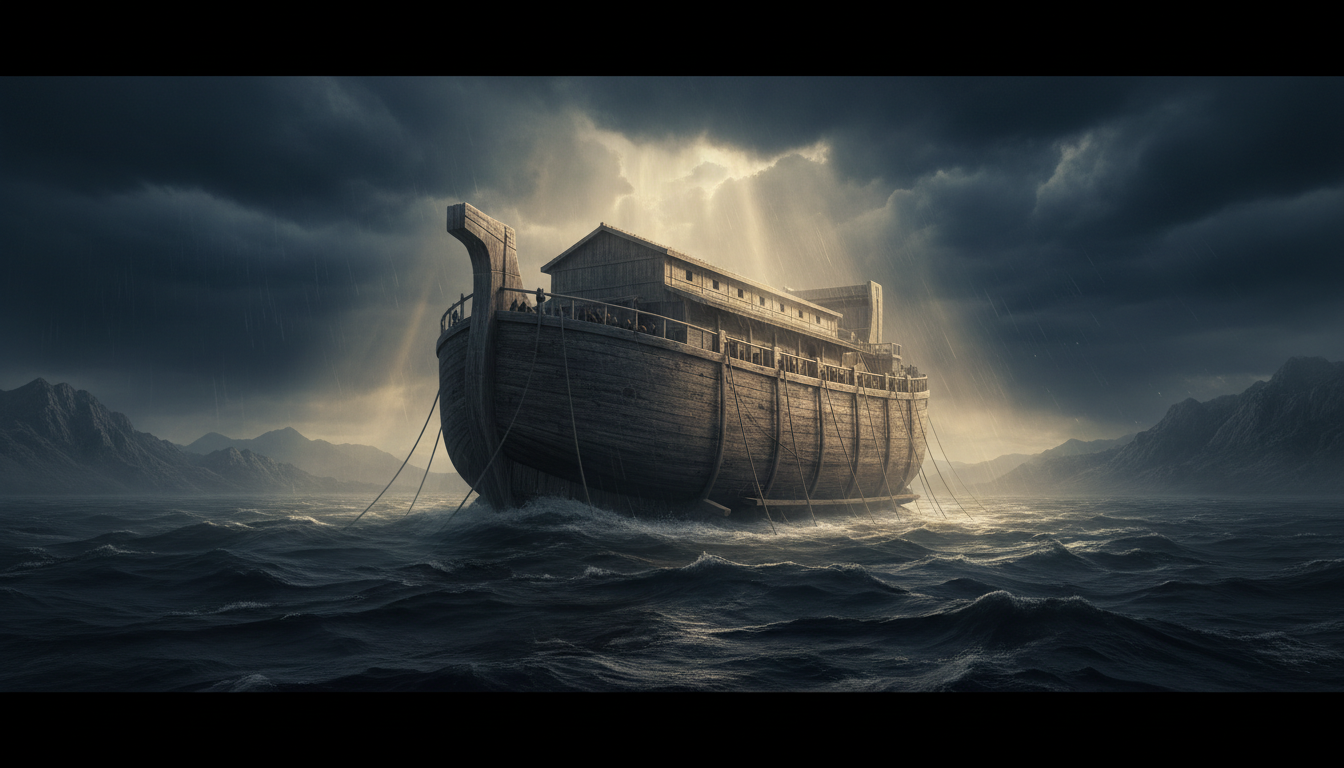
God instructed Noah to build an ark of gopher wood, with rooms and a covering of pitch. Genesis gives its dimensions as 300 cubits long, 50 cubits wide, and 30 cubits high (Genesis 6:14–16). The exact modern measurement depends on the length of the cubit assumed; Scripture itself provides the dimensions in cubits.
God told Noah to bring his wife, his three sons—Shem, Ham, and Japheth—and their wives into the ark. Animals were also to be preserved. Genesis 6:19–20 speaks of pairs of living creatures, while Genesis 7:2–3 gives additional instructions concerning clean animals and birds. Noah obeyed what God commanded (Genesis 6:22; 7:5).
The Rain Begins
When Noah was 600 years old, the floodwaters came. Genesis 7:11 describes the fountains of the great deep bursting forth and the windows of heaven opening. Rain fell for forty days and forty nights (Genesis 7:12).
Noah’s family and the animals entered the ark, and the Lord shut him in (Genesis 7:16). The waters rose and lifted the ark. Genesis describes the flood as overwhelming the land and bringing death to creatures outside the ark (Genesis 7:17–24). The waters prevailed for 150 days, a period distinct from the forty days of rainfall.
God Remembered Noah
Genesis 8 opens with a turning point: “God remembered Noah.” This does not mean God had forgotten him. In the biblical narrative, it signals God’s faithful attention and action on behalf of those he had preserved.
God sent a wind over the earth, and the waters began to recede. The ark came to rest on the mountains of Ararat (Genesis 8:4). Noah later sent out a raven and then a dove to test whether the land had dried. On one return, the dove carried a freshly plucked olive leaf; later, it did not return (Genesis 8:6–12).
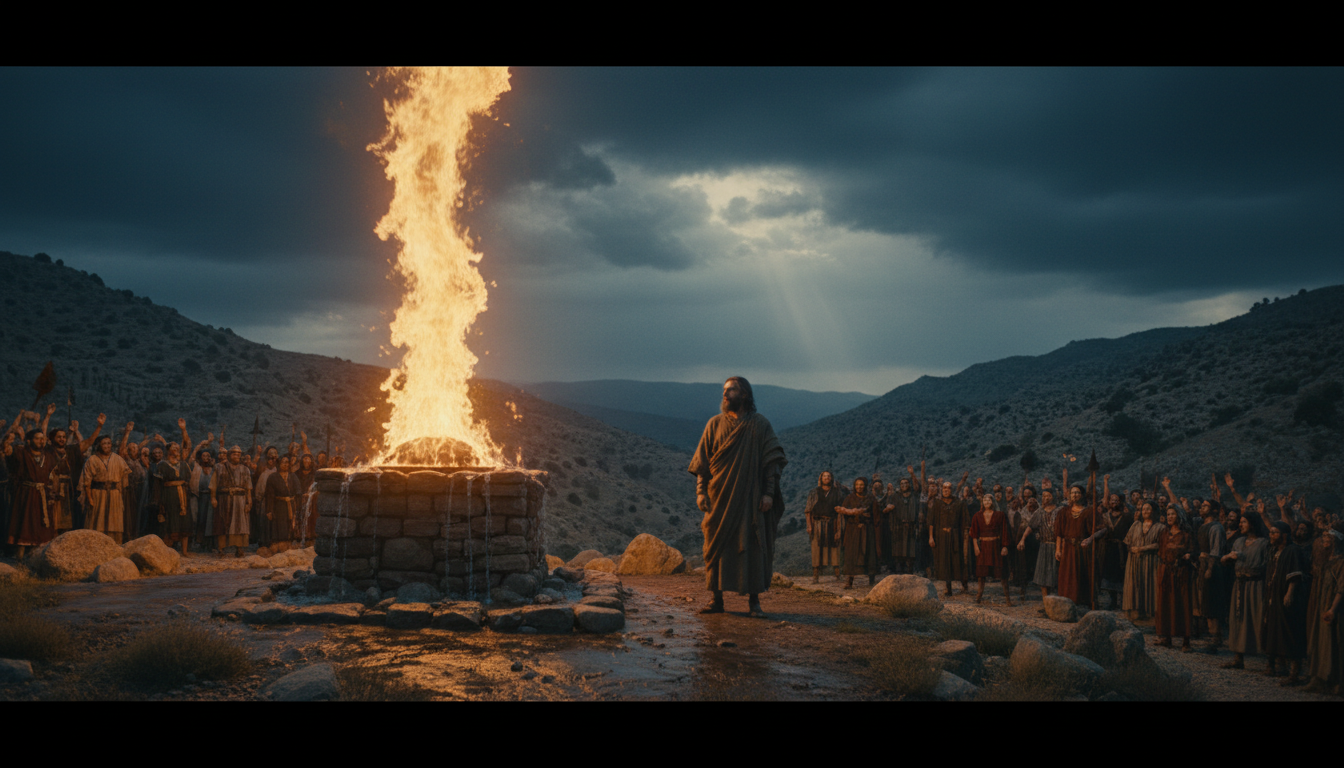
Only after God instructed him did Noah leave the ark with his family and the animals (Genesis 8:15–19). Noah then built an altar and offered burnt offerings to the Lord (Genesis 8:20).
The Rainbow and God’s Covenant
In Genesis 9, God blessed Noah and his sons and established a covenant with them, their descendants, and every living creature. God promised never again to destroy all flesh by a flood, and he appointed the rainbow as the sign of that covenant (Genesis 9:8–17).
The rainbow is therefore more than a beautiful detail at the end of the story. In Genesis, it serves as a visible reminder of God’s covenant commitment to the living world.
Five Lessons From Noah’s Ark
- Faith expresses itself through obedience. Noah acted on God’s instructions even before the flood began (Genesis 6:22).
- Human wrongdoing matters. The account treats violence and corruption as serious offenses, not minor failures (Genesis 6:11–13).
- God’s judgment and mercy appear together. The flood brings judgment, while the ark preserves Noah’s family and living creatures.
- Waiting can be part of faithfulness. Noah remained in the ark through the long recession of the waters and left at God’s command (Genesis 8:13–19).
- God keeps his covenant promises. The rainbow points back to the promise God made to Noah and every living creature (Genesis 9:12–17).
What Does Noah’s Story Mean for Christians Today?
The New Testament returns to Noah’s example. Hebrews 11:7 commends his faith, while 1 Peter 3:20–21 uses the flood narrative in a discussion of salvation and baptism. Jesus also refers to the days of Noah when calling his hearers to spiritual readiness (Matthew 24:37–39).
These passages invite Christians to read Noah’s story not merely as a dramatic event from the past but as a call to take God seriously, walk faithfully, and trust his promises.
Frequently Asked Questions About Noah’s Ark
How long did it rain during Noah’s flood?
Genesis 7:12 says the rain fell for forty days and forty nights. The overall flood account spans a longer period, including the rise and recession of the waters.
Where did Noah’s ark come to rest?
Genesis 8:4 says the ark rested on the mountains of Ararat. The text does not identify a confirmed modern archaeological location for the ark.
What does the rainbow symbolize in Genesis?
The rainbow is the sign of God’s covenant promise that a flood would never again destroy all flesh (Genesis 9:8–17).
Explore More Bible Stories
Continue exploring faith and courage in Daniel in the Lions’ Den and The Fourth Man in the Fire. You can also browse our Bible Stories collection.
Primary Scripture: Genesis 6–9. Interpretive observations are distinguished from details directly stated in the biblical text.