A prophet runs from God’s command. A violent storm threatens a ship. A great fish swallows a man—and an entire city receives a warning that changes its course. The story of Jonah is far more than a tale about a sea creature. Across four short chapters, it reveals God’s mercy, human reluctance, repentance, and the challenge of loving people we would rather avoid.
God Calls Jonah to Nineveh
The Book of Jonah begins with God’s command to the prophet Jonah son of Amittai: go to the great city of Nineveh and speak against its wickedness (Jonah 1:1–2). Nineveh was an important Assyrian city, and Jonah did not want to carry God’s message there.
Instead, Jonah traveled to Joppa, found a ship headed toward Tarshish, paid the fare, and boarded it in an attempt to flee from the presence of the Lord (Jonah 1:3). The narrative highlights the futility of trying to escape God’s call.
The Storm at Sea
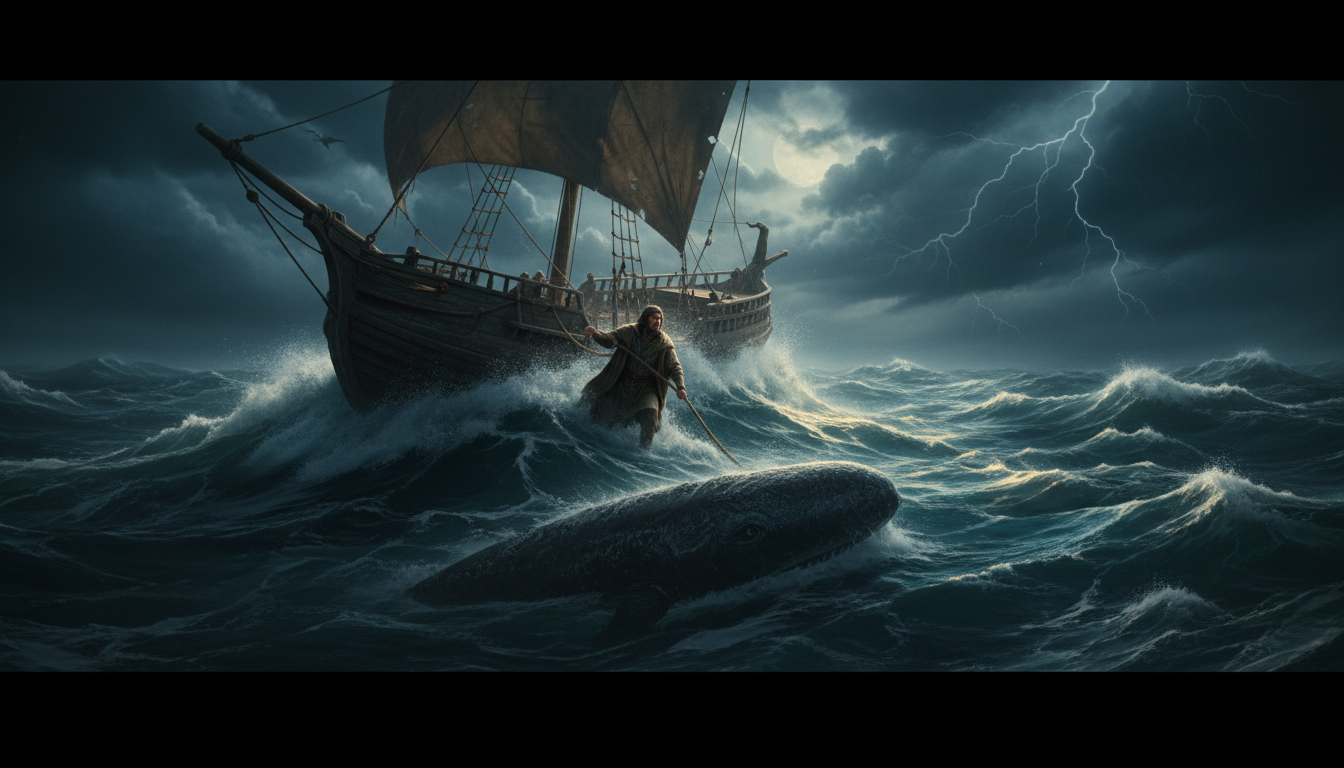
The Lord sent a powerful wind across the sea, and a great storm threatened to break the ship apart. The sailors cried out to their gods and threw cargo overboard to lighten the vessel. Meanwhile, Jonah was asleep below deck (Jonah 1:4–6).
The sailors cast lots to discover who was responsible for their danger, and the lot fell on Jonah. He told them he worshiped the Lord, the God of heaven who made the sea and dry land. Jonah acknowledged that he was fleeing from God (Jonah 1:7–10).
Jonah told the sailors to throw him into the sea so that it would become calm. At first they tried to row back to land, but the storm only grew worse. Finally, after praying to the Lord, they cast Jonah into the water. The sea became calm, and the sailors responded with fear and reverence toward the Lord (Jonah 1:11–16).
Jonah and the Great Fish: Three Days and Three Nights
God appointed a great fish to swallow Jonah. Jonah remained in its belly for three days and three nights (Jonah 1:17). The text does not identify the creature’s biological species. Although the account is widely called Jonah and the Whale, the Hebrew text of Jonah refers to a great fish.
Inside the fish, Jonah prayed. His prayer in Jonah 2 recalls distress, the depths of the sea, and God’s deliverance. He acknowledged that salvation belongs to the Lord (Jonah 2:1–9). Then God commanded the fish, and it released Jonah onto dry land (Jonah 2:10).
Jonah Preaches to Nineveh
God called Jonah a second time to go to Nineveh. This time Jonah obeyed (Jonah 3:1–3). He entered the city and announced that Nineveh would be overthrown in forty days (Jonah 3:4).
The people of Nineveh believed God and proclaimed a fast. From the greatest to the least, they responded with signs of repentance. The king also humbled himself and called on the people to turn from evil and violence (Jonah 3:5–9).
When God saw that they turned from their evil ways, he did not bring upon the city the destruction he had announced (Jonah 3:10). The chapter places repentance and divine mercy at the center of the story.
Why Was Jonah Angry When Nineveh Repented?
Surprisingly, Jonah was deeply displeased by Nineveh’s deliverance. He admitted that he had fled because he knew God was gracious, merciful, slow to anger, and abounding in steadfast love (Jonah 4:1–2). Jonah understood God’s compassion but struggled to accept that it could extend to Nineveh.
God then used a plant, a worm, and the scorching heat to expose Jonah’s priorities. Jonah cared deeply about the plant that shaded him, though he had not made it grow. God challenged him to consider how much more compassion was due to the people of Nineveh and even its animals (Jonah 4:5–11).
The book ends with God’s question rather than a recorded answer from Jonah. Readers are left to examine whether their own hearts reflect God’s mercy.
Five Powerful Lessons From the Book of Jonah
- We cannot outrun God’s call. Jonah traveled in the opposite direction, but the Lord confronted his disobedience (Jonah 1:3–4).
- Prayer is possible even in the depths. Jonah cried out to God from his distress (Jonah 2:1–9).
- Repentance matters. Nineveh’s response included turning away from violence and wrongdoing (Jonah 3:8–10).
- God’s mercy is wider than our preferences. Jonah resisted compassion toward a city he disliked (Jonah 4:1–2, 10–11).
- Obedience and compassion belong together. Jonah eventually delivered the message, but God also confronted the condition of his heart (Jonah 3–4).
How Does Jonah Connect to Jesus?
Jesus referred to Jonah when speaking of his own death and resurrection. In Matthew 12:39–41, he described the sign of Jonah and contrasted the repentance of Nineveh with the unbelief of some of his hearers. Christians therefore read Jonah both as a prophetic account and as part of the wider biblical story pointing toward Christ.
Frequently Asked Questions About Jonah
Was Jonah swallowed by a whale or a fish?
Jonah 1:17 calls the creature a great fish. The passage does not specify its species. “Jonah and the Whale” is the common English name for the story.
How long was Jonah inside the great fish?
The text states three days and three nights (Jonah 1:17).
Why did Jonah run from God?
Jonah 4:2 reveals his stated reason: he knew God was merciful and feared that Nineveh might be spared.
Did Nineveh repent?
Yes. Jonah 3 describes the city’s response to the warning, including fasting and turning from evil. God then withheld the announced disaster.
Explore More Bible Stories
Continue with Noah’s Ark and the Great Flood, David and Goliath, Daniel in the Lions’ Den, and The Fourth Man in the Fire. Browse our Bible Stories collection for more.
Primary Scripture: Jonah 1–4. The account identifies the sea creature as a great fish without specifying its species.