Behind them came Pharaoh’s chariots. Ahead lay the sea. The Israelites had left Egypt, but now they appeared trapped between an army and deep water. In Exodus 14, God made a path where none seemed possible. The account of Moses and the Red Sea is one of Scripture’s most memorable stories of deliverance, faith, and God’s power.
Why Were the Israelites Trapped at the Red Sea?
After the plagues in Egypt and the departure of the Israelites, God directed Moses to lead the people to camp near the sea (Exodus 14:1–4). The route would make Pharaoh think they were wandering and trapped. The narrative explains that God would display his glory through the coming confrontation.
When Pharaoh learned that Israel had fled, he and his officials regretted losing their labor force. Pharaoh assembled his chariots and pursued the Israelites with his army (Exodus 14:5–9). As the Egyptians approached, the people of Israel were terrified and cried out to the Lord. They also accused Moses of bringing them into the wilderness to die (Exodus 14:10–12).
Moses Tells the People Not to Fear
Moses urged the people not to fear but to stand firm and see the salvation the Lord would accomplish for them. He told them that the Lord would fight for them (Exodus 14:13–14). Yet God’s next instruction was also a call to move forward: Moses was to tell the people to go ahead, lift his staff, and stretch his hand over the sea (Exodus 14:15–16).
The account holds trust and obedience together. The people could not create their own escape, but they were called to follow God’s direction when he opened the way.
How Did Moses Part the Red Sea?
The angel of God and the pillar of cloud moved behind Israel, standing between the Israelites and the Egyptian camp. The cloud brought darkness to one side while providing light to the other, preventing the armies from approaching each other through the night (Exodus 14:19–20).
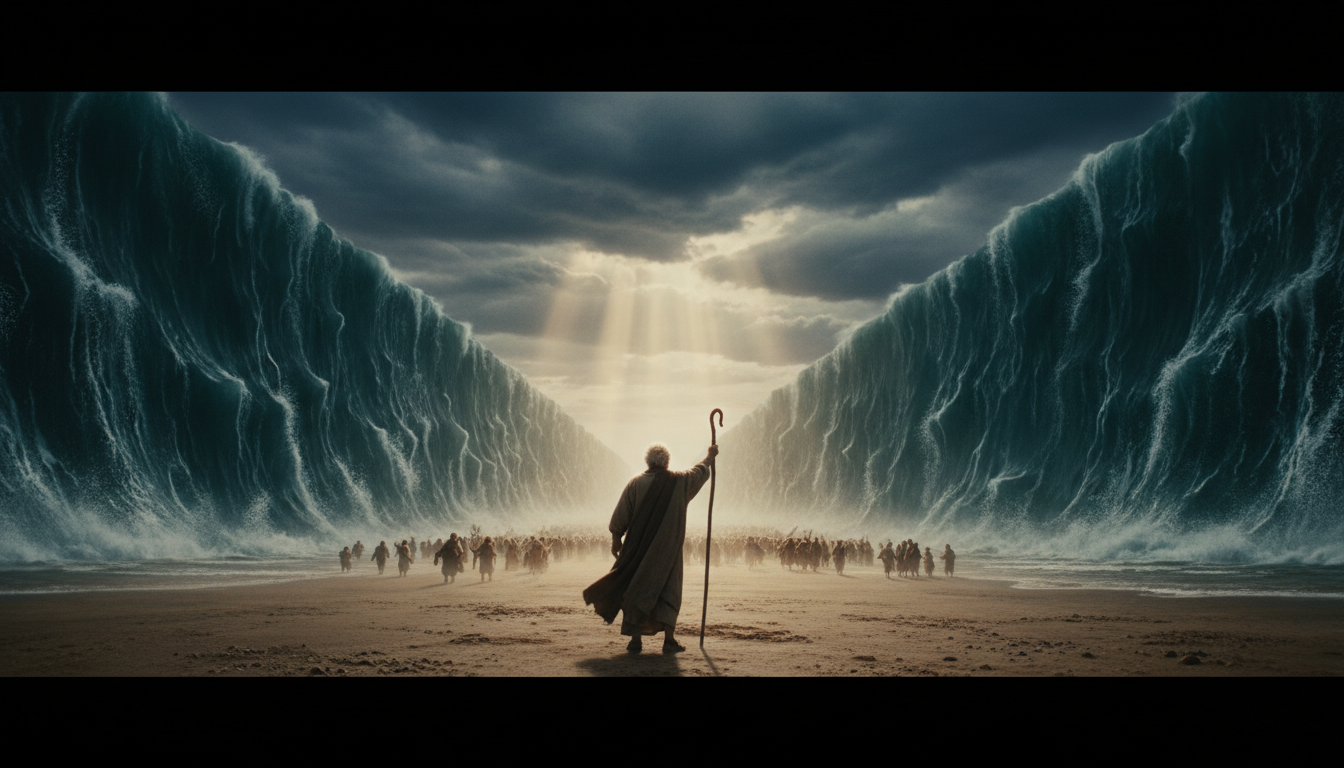
Moses stretched out his hand over the sea. Scripture says the Lord drove the sea back with a strong east wind throughout the night, making the seabed dry and dividing the waters (Exodus 14:21). The Israelites entered the sea on dry ground, with water described as a wall to their right and left (Exodus 14:22).
Although the event is commonly called the parting of the Red Sea, the Hebrew expression yam suph is often rendered “Sea of Reeds.” The precise geographical identification is debated. Exodus 14 presents the deliverance as God’s act, regardless of those translation and location questions.
Pharaoh’s Army Enters the Sea
The Egyptian forces pursued Israel into the seabed. During the morning watch, the Lord threw the Egyptians into confusion and hindered their chariots. The soldiers recognized that the Lord was fighting for Israel against them (Exodus 14:23–25).
God then instructed Moses to stretch out his hand again. As morning came, the waters returned. The Egyptian forces that had pursued the Israelites into the sea were overwhelmed, while the Israelites had crossed on dry ground (Exodus 14:26–29).
Exodus 14 concludes by saying that Israel saw the Lord’s great power, feared the Lord, and believed in him and in Moses his servant (Exodus 14:30–31). In Exodus 15, Moses and the Israelites responded with a song of praise.
Five Powerful Lessons From the Red Sea Crossing
- Fear does not have to determine our response. The Israelites were afraid, but Moses called them to trust God’s deliverance (Exodus 14:10–14).
- Faith and obedience work together. God commanded the people to move forward even before they could see a clear path (Exodus 14:15–16).
- God is not limited by human circumstances. The sea and the pursuing army appeared to leave no escape, yet the Lord delivered his people (Exodus 14:21–30).
- Remember what God has done. Israel’s deliverance became a defining act of remembrance and worship (Exodus 14:31; 15:1–21).
- Give glory to God. The story attributes the victory to the Lord’s power rather than to Israel’s military strength (Exodus 14:13–14, 30–31).
What Does the Red Sea Crossing Mean for Christians?
The Red Sea crossing is first a story about God’s deliverance of Israel from Egypt. Christians also encounter it in the New Testament: 1 Corinthians 10:1–2 recalls Israel’s passage through the sea, and Hebrews 11:29 highlights the faith involved in crossing on dry land.
The passage does not promise that every obstacle will disappear or that every crisis will end as Israel’s did. It does invite believers to trust God’s character, follow his commands, and remember his faithfulness even when circumstances are frightening.
Frequently Asked Questions About Moses and the Red Sea
Who parted the Red Sea?
Exodus 14 describes Moses stretching out his hand at God’s command, while the Lord drove back and divided the waters (Exodus 14:16, 21).
Did the Israelites walk through on dry ground?
Yes. Exodus 14:22 and 14:29 explicitly describe the Israelites crossing on dry ground with water on either side.
What happened to Pharaoh’s chariots?
The Egyptian chariots pursued Israel into the sea, but the returning waters overwhelmed the pursuing forces (Exodus 14:23–28). The passage does not explicitly state that Pharaoh himself died in the sea.
Is the Red Sea also called the Sea of Reeds?
Yes. The Hebrew term yam suph can be translated “Sea of Reeds,” and the exact location of the crossing remains debated.
Explore More Bible Stories
Read Noah’s Ark and the Great Flood for another biblical account involving water and deliverance. Continue with David and Goliath, Daniel in the Lions’ Den, and Elijah Calls Down Fire from Heaven. Browse our Bible Stories collection.
Primary Scripture: Exodus 14, with related passages in Exodus 15, Hebrews 11:29, and 1 Corinthians 10:1–2. Historical and geographical uncertainties are distinguished from the biblical narrative.